Chandigarh shooting range where Olympic champion Abhinav Bindra learned the fundamentals of the 10m air rifle isn’t good enough for modern training
Navneet Singh
It was at the Chandigarh Shooting Ranges where Abhinav Bindra learnt his initial lessons in the sport. Abhinav Bindra went on to become the first Indian to win an individual Olympic gold. He fired many dreams with his stunning gold medal in the 10m air rifle at the 2008 Beijing Olympics.
In the late 1990s and early 2000s, a teenaged Abhinav Bindra would visit this outdoor shooting range in Chandigarh and take aim in the sweltering summer heat.
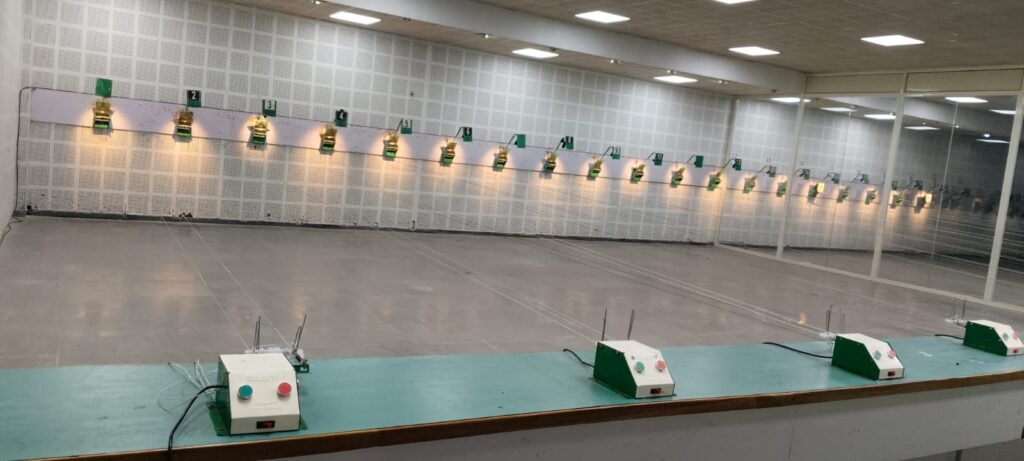
But the range where Abhinav Bindra took his first steps towards Olympic glory now stands neglected, lacking even the basic facilities required to train the next generation of shooters in Chandigarh.
With such a legacy to preserve, the shooting range here should have been upgraded and equipped with modern facilities and turned into an infrastructure where young shooters could not only learn but also draw inspiration from one of the legends of Indian shooting.
“Unfortunately, that has not been the case,” says an international shooter from Chandigarh.
The 10m air range at Chandigarh Shooting Ranges even now lacks the electronic shooting target system used at international competitions. Abhinav Bindra used to train here on manual paper targets in his formative days, and there has been no upgradation of the facility. Abhinav Bindra later built a 10m air weapon training facility at his home where he prepared for international competitions.
“There have been no efforts from sport administrators or from the state federation to upgrade the facility,” says a national level shooter. “The 10m air weapon range has been upgraded but doesn’t have modern electronic equipment.”
The short-sightedness of sports administrators means that despite Chandigarh producing so many international level shooters, the range here continues to lack modern infrastructure.
“The shooting ranges in Chandigarh are outdated. They lack modern equipment to prepare for global competition, and therefore we go to the Mohali Shooting Range to train,” says an international shooter from Chandigarh. “Nothing has changed in the last 10 years at 50m and 25m ranges.”
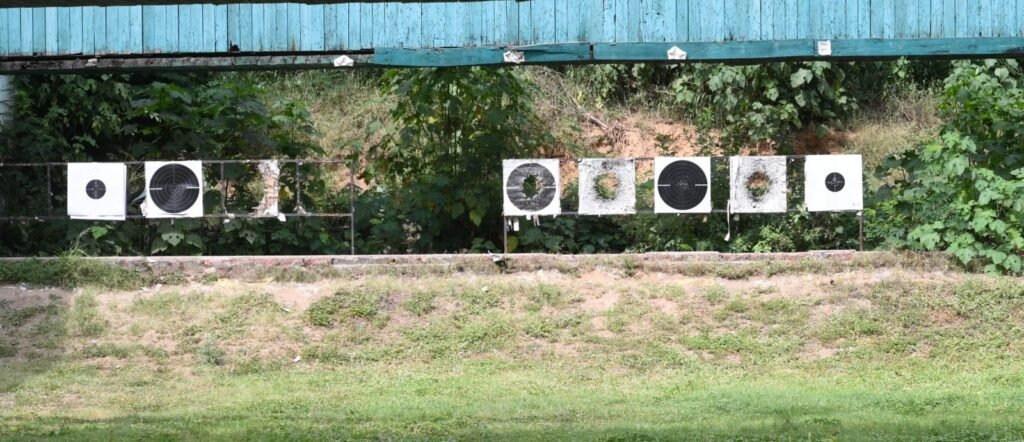
Several top international shooters have their own 10m air rifle ranges at home, but to practice for small-bore events one has to go to the Mohali Shooting Ranges. “It is difficult to set up shooting ranges at home. Not everyone has the money to invest,” says another national-level shooter.
Target shooting, one of the Olympic disciplines, has enhanced India’s sporting profile at the global level. Indian shooters have excelled at various international platforms apart from winning Olympic medals. Rajyavardhan Singh Rathore was the first Indian to win an Olympic medal, a silver in men’s double trap at the 2004 Athens Olympics. Four years later, Abhinav broke the glass ceiling by winning gold in the men’s 10m air rifle at the 2008 Beijing Games.
At the 2012 London Games, Gagan Narang (bronze) and Vijay Kumar (silver) further strengthened India’s legacy at the world level. At the 2024 Paris Olympic Games, Manu Bhaker (10m air pistol bronze and mixed team bronze), Sarabjot Singh (mixed 10m air pistol bronze) and Swapnil Kusale (50m rifle 3 positions bronze) kept the Indian flag flying high.
Recently, the National Rifle Association of India (NRAI), the national governing body of shooting sports in India, celebrated its 75 years. One of the key agendas announced during the 75-year celebration was to scout talent at the grassroots level. But without modern shooting ranges across the country, it will be a challenging task for the NRAI to lay a solid foundation at the grassroots level.
EOM